How much does 3D printing cost? A worked example, and published rates
No page on the first screen of Google actually shows what a print costs. So here is one small part, its size, grams and print time, and what published Australian rates turn that into. These are other services' figures with dates, not ours: Melbourne Imprint is not open and has no prices.
Melbourne ImprintUpdated 3 October 20267 min read
Quick answer
A small plastic part costs a few dollars in material, but most services charge a minimum per job, so in practice a single small print from an Australian service usually costs $15 to $50 on the rates below. Bigger, longer prints are priced on grams of material and hours of machine time. Library makerspaces, where you run the printer yourself, can be free.
What sets the price
- Material. Charged by the gram. Standard PLA and PETG are the cheapest.
- Machine time. A printer busy for ten hours cannot print anything else. Some services charge by the hour; most fold it into the quote.
- Minimum charge. Setting up and checking a print costs much the same for a tiny part as a big one, so most services set a minimum per job.
- Material type and finish. Engineering materials, resin and smoothing or painting cost more.
- Design help. If there is no file yet, modelling or scanning is extra.
A worked example
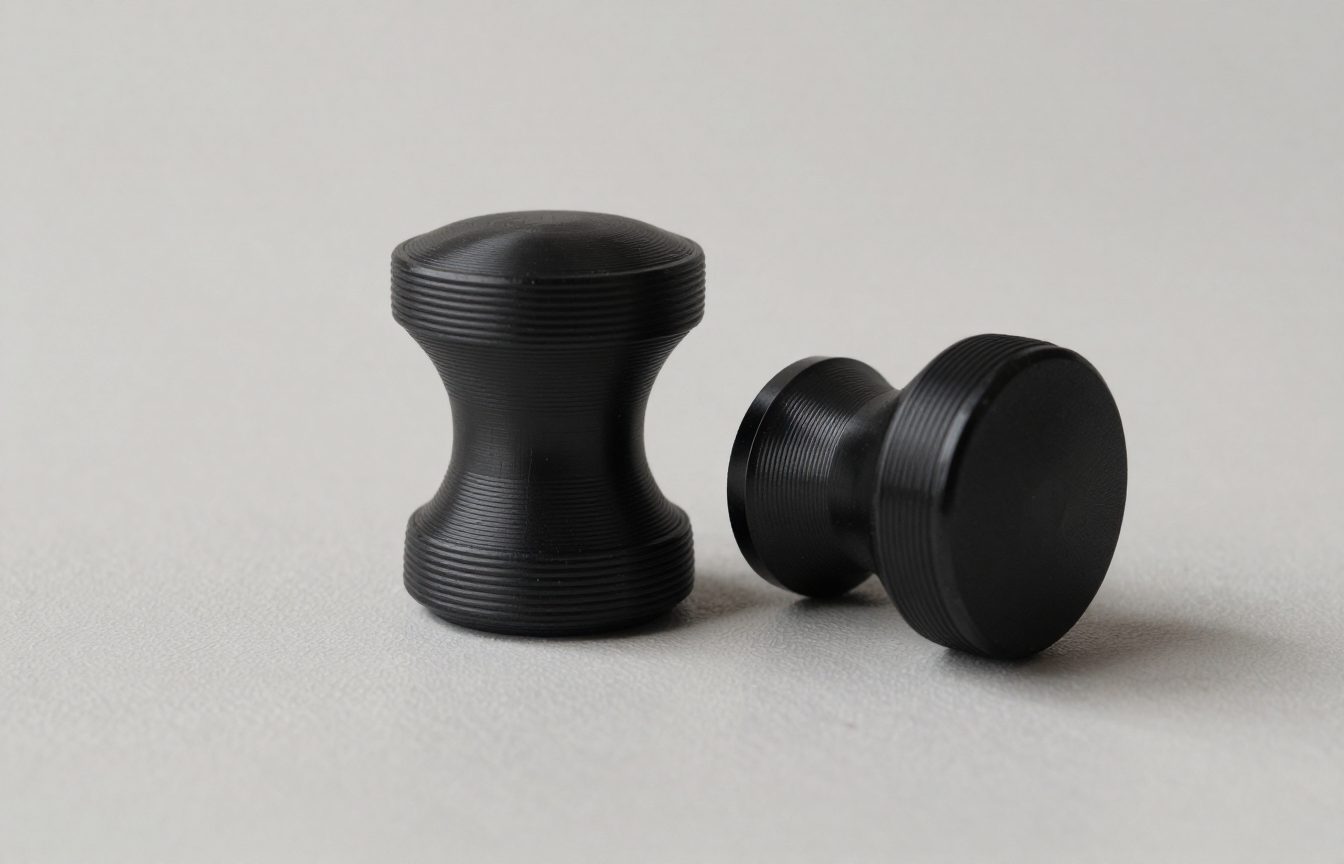
replacement_knob.3mfworked example
- Size
- 48 × 48 × 22 mm
- Material
- PLA
- Filament
- 28 g
- Print time
- about 1 h 40 min
- Material only, at $0.10 a gram$2.80
- A service with a $15 minimum per job$15.00
- A service with a $25 minimum order$25.00
- A service charging $50 for anything under 3 hours$50.00
A hypothetical part, sized for the example. The rates are each service's own published figures (table below), read 3 October 2026. Not a quote from anyone, and not Melbourne Imprint's price.
The material in a small part is worth very little. What you pay for is the setup, the machine and someone's time, which is why minimums dominate small jobs and why it pays to print several small parts together.
Published rates
| Service | Published rate | Read |
|---|---|---|
| UNSW MakingSydney, university makerspace (prices for UNSW users, GST inclusive) | Recycled PLA or PETG $0.10 a gram; ASA $0.12; TPU $0.13 | 3 Oct 2026 |
| Brisbane 3D PrintingBrisbane, workshop service | $50 minimum; in PLA or PETG, under 3 hours $50, 3 to 6 hours $50 to $90, 6 to 10 hours $90 to $155 (GST inclusive) | 3 Oct 2026 |
| RBZ 3DOnline, Australia-wide | $15 minimum per job; says a palm-sized functional PLA part typically lands between $20 and $50 | 3 Oct 2026 |
| JDL InnovationsJimboomba, Queensland, online quotes | $25 minimum order value | 3 Oct 2026 |
| City of Melbourne Libraries makerspacesMelbourne, do-it-yourself after a safety induction | Filament free; keep prints under 4 hours (Library at The Dock, narrm ngarrgu) or 7 hours (Kathleen Syme) | 3 Oct 2026 |
What a home printer costs to run
If you print often, owning a printer can be cheaper than paying a service. An entry-level filament printer costs a few hundred dollars, and a well-equipped one with an enclosure and multi-colour feeding costs more. Filament is the main running cost: a one-kilogram spool of standard PLA or PETG goes a long way, because most small parts weigh only a few grams to a few tens of grams. Electricity for a typical print is a small cost compared with filament. The hidden costs are time and failures: learning the printer, levelling and maintaining it, and reprinting parts that fail.
Ways to lower the price of a print
- Print several parts together to share the minimum charge.
- Choose PLA or PETG unless the part needs something else.
- Use less infill for parts that do not carry load.
- Design out supports by adding chamfers instead of overhangs, or by splitting a part into pieces.
- Ask about layer height: thicker layers print faster and cost less if fine detail does not matter.
- Send a print-ready file so you do not pay for repair or modelling time.
Getting an accurate quote
Send the file (3MF or STL, in millimetres), the quantity, the material or what the part has to withstand, the colour, any critical sizes, the finish you need and your deadline. A clear brief gets an accurate quote first time and avoids reprints. If you only have a broken part, send a photo with measurements; modelling is quoted separately. See what file to send.
Filament or resin: the price difference
Filament (FDM) printing is usually the cheapest way to make functional plastic parts and larger objects. Resin printing gives much finer detail and smoother surfaces, which suits miniatures, jewellery masters and small precise parts, but resin costs more, prints are often smaller, and washing and curing add time. For a large practical part, filament is almost always cheaper; for a tiny detailed one, resin can be worth it.
Design and scanning costs
If there is no file, someone has to make one. Simple parts can be modelled quickly from measurements; complex shapes may need 3D scanning and cleanup first. Design is usually charged by time, so the clearer your measurements and photos, the lower the cost. Once the file exists, every later copy costs only the print.
One-off, small batch or production
For one to a few dozen parts, 3D printing is usually the cheapest way to make them, because there is no tooling. Somewhere from hundreds to thousands of copies, depending on the part, injection moulding becomes cheaper per part, but only after paying for the mould. Many products start as printed prototypes and move to moulding once the design is fixed and demand is proven.
Why quotes for the same part can differ
Two services can quote very different prices for the same file. One may print at a finer layer height for a better finish, another may use more walls and infill for strength, and another may include finishing or a faster turnaround. Some include GST and postage, others add them later. Compare quotes on the same material, the same quantity, the same finish and the same delivery, and ask what settings each service plans to use.
Pricing for businesses and schools
Small businesses printing jigs, fixtures, display pieces or short runs of products often get better rates by ordering in batches or agreeing a regular account with a local service. Schools, makers and students can usually print cheaply at library and university makerspaces where they are eligible, paying only for material or nothing at all.
What does not change the price much
Colour rarely changes the price for standard materials, unless you want a special-effect filament or several colours in one part. The shape of a part matters less than its volume and height: a tall thin part can take longer than a short wide one of the same weight, because printers build layer by layer. Fine detail costs more only when it needs thinner layers or resin.
Prices change
Filament prices, electricity and labour all move over time, and services update their rates. The figures on this page are the published rates on the date we read them; treat them as a guide and get a current quote for your part.
A quick checklist before you order
Before you pay for a print, check that the file is in millimetres and is the final version, that you have chosen a material that suits where the part will live, that you have asked for several parts together if you need them, and that the quote includes delivery and GST. A two-minute check avoids paying twice for the same part.
Repairing instead of replacing
The best value from 3D printing is often a repair: a broken knob, clip, battery cover or bracket that the maker no longer sells. If the alternative is replacing a whole appliance, a printed part at a service's minimum charge is cheap. Measure the broken part carefully, photograph it from several sides, and keep the pieces, because they help whoever models the replacement get the fit right.
Is 3D printing worth the money?
For a one-off part that is no longer made, almost always: a $25 print beats a $200 replacement appliance. For many copies of a simple part, injection moulding gets cheaper per part once quantities reach the hundreds or thousands, though the mould itself is expensive. For something you will print often, a home printer can pay for itself, if you are happy to learn.
Common questions
How much does it cost to 3D print something in Australia?
On the published rates we read on 3 October 2026, a single small print from an Australian service typically costs $15 to $50 because of minimum charges, while the plastic itself is around $0.10 a gram for standard materials at a university makerspace's rates.
Why is 3D printing so expensive for small parts?
Because of minimum charges. Preparing, checking and running a print takes about the same effort for a tiny part as a bigger one.
Can I legally sell 3D prints?
Generally yes, if you own the design or have permission. Do not sell copies of other people's designs or branded products without permission, and some designs online are licensed for personal use only.
Sources
Melbourne Imprint is opening soon and is not taking orders yet.